Why South Carolina Is America’s Top Moving Destination
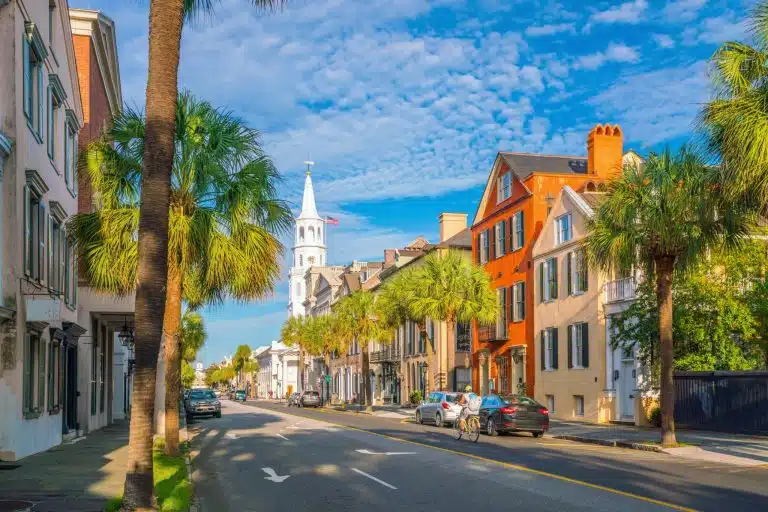
South Carolina is one of the fastest-growing states in the Southeast, adding roughly 90,000 new residents per year — nearly double the national growth rate. The combination of an affordable cost of living, no tax on Social Security benefits, a diversified manufacturing base anchored by BMW, Boeing, Volvo, and Michelin, and a quality of life built around coastal living and mountain access makes the Palmetto State one of the top inbound moving destinations in the country.
That said, South Carolina’s income tax is higher than neighboring North Carolina, the unemployment rate runs above the national average, and rural areas face real challenges with poverty, school quality, and healthcare access. The state’s appeal is strongest in its three growth corridors — the Charleston coast, the Greenville-Spartanburg upstate, and the Myrtle Beach/Hilton Head resort coast — each of which offers a very different lifestyle and price point.
This guide covers everything you need to evaluate a move to South Carolina — housing costs by metro, the real state of the job market, tax considerations, and the interstate moving logistics unique to a South Carolina relocation.
Pros of Moving to South Carolina
✔ Affordable Cost of Living: South Carolina’s cost of living is well below the national average. The statewide median home sale price was $340,000 in 2025 (SC Realtors), and one-bedroom rents in Columbia average just $1,175/month. Outside of Charleston, most of the state offers significant savings over comparable metros in the Northeast, Florida, or California.
✔ Strong Manufacturing and Job Growth: South Carolina added roughly 72,000 nonfarm jobs over the past year — the fastest growth rate in the country at 3.1%. BMW (Spartanburg), Boeing (North Charleston), Volvo (Ridgeville), and Michelin (Greenville) anchor a world-class advanced manufacturing corridor. The state’s healthcare, hospitality, and professional services sectors are also expanding rapidly.
✔ No Tax on Social Security: South Carolina does not tax Social Security benefits, and residents over 65 can deduct up to $15,000 in retirement income. Combined with below-average property taxes and affordable housing, this makes the state one of the most retiree-friendly in the Southeast.
✔ 187 Miles of Coastline: From Charleston’s historic waterfront and Kiawah Island to Hilton Head and Myrtle Beach, South Carolina’s coast offers year-round beach access, boating, fishing, and golf. The state also includes the Blue Ridge foothills in the upstate — Greenville residents are less than an hour from mountain trails.
✔ Warm Climate and Outdoor Living: South Carolina averages 215+ sunny days per year with mild winters. Even in the upstate, January highs average 50°F. The combination of affordable housing, outdoor recreation, and warm weather is a major draw for transplants from the Northeast and Midwest.
Cons of Moving to South Carolina
✘ Higher-Than-Average Unemployment: South Carolina’s unemployment rate was 4.8% in December 2025 — above the 4.4% national average. While the state’s job growth rate is the fastest in the nation, the unemployment rate has historically run above the national figure, particularly in rural areas and the I-95 corridor.
✘ State Income Tax Higher Than Neighbors: South Carolina’s top marginal income tax rate is 6.0% (temporarily reduced from 6.2% through June 2026) — significantly higher than North Carolina’s 3.99% flat rate and Florida’s 0%. Legislation to further reduce or eliminate the income tax is under consideration but has not passed.
✘ Hurricane and Flood Risk: Coastal South Carolina is prone to hurricanes from June through November. Major storms in recent years (Florence 2018, Ian 2022) caused significant flooding, particularly in the Lowcountry and Pee Dee region. Flood insurance is essential for coastal properties and increasingly relevant inland.
✘ Summer Heat and Humidity: Summers are hot and humid — temperatures regularly exceed 90°F with high humidity from June through September, especially in the Lowcountry and Midlands. Air conditioning is not optional, and electricity bills spike during summer months.
✘ Limited Public Transit and Rural Challenges: South Carolina is car-dependent. No major city has a rail transit system, and bus service is limited. Rural areas — particularly along the I-95 corridor and in the Pee Dee region — face challenges with poverty, healthcare access, and school quality that contrast sharply with the state’s growth metros.
Cost of Living in South Carolina
South Carolina’s overall cost of living falls below the national average, making it one of the more affordable states in the Southeast. The statewide median home sale price was $340,000 in 2025 (SC Realtors annual report), with prices up just 1.5% year-over-year. The Redfin all-home-types median was $388,900 in January 2026, up 2.9% — reflecting the mix shift toward higher-priced single-family sales in growth areas.
Rents are well below national averages outside of Charleston. A one-bedroom in Columbia averages $1,175, Greenville $1,438, and Myrtle Beach around $1,200. Charleston is the exception at $1,852 — driven by the city’s historic district, tourism economy, and coastal premium. Rents have been essentially flat or declining across most SC metros in 2025–2026.
Utilities in South Carolina average $150–$200/month, with electricity costs rising in summer. Groceries run about 5% below the national average, and gas prices are consistently among the lowest in the country. Property taxes are moderate, and homeowners 65+ qualify for a Homestead Exemption that reduces property taxes on the first $50,000 of assessed value.
Cost of Living Comparison: South Carolina Metro Areas
South Carolina’s cost of living ranges from budget-friendly in the Midlands to coastal premiums in Charleston and Hilton Head. Here’s how the major metros compare:
| Expense Category | Charleston | Greenville | Columbia | Myrtle Beach | National Avg. |
|---|---|---|---|---|---|
| Avg. Rent (1-BR) | $1,852/mo | $1,438/mo | $1,175/mo | $1,200/mo | $1,650/mo |
| Avg. Rent (2-BR) | $2,076/mo | $1,651/mo | $1,371/mo | $1,400/mo | $1,950/mo |
| Median Home Sale Price | $425,000 | $310,000 | $275,000 | $310,000 | $412,500 |
| Top State Income Tax | 6.0% (temporarily reduced from 6.2% through June 2026) | Varies by state | |||
Sources: RentCafe (Jan–Feb 2026), Charleston Trident Association of Realtors (2025), SC Realtors (2025 Annual), Redfin (Jan 2026). Myrtle Beach rent estimated from Apartment List/RentCafe regional data. National rent averages from Zumper/Apartments.com.
Housing Market Trends in South Carolina
South Carolina’s housing market is normalizing after years of pandemic-era price surges. The 2025 annual median sale price was $340,000 (SC Realtors), up just 1.5% year-over-year — a dramatic slowdown from the double-digit gains of 2021–2023. Homes are spending longer on market, and the sale-to-list ratio has slipped to 97.3%, meaning buyers are negotiating more effectively than at any point in the past four years.
Charleston remains the most expensive major market, with a median sale price just under $425,000 — essentially flat for three years despite strong demand. Prices are stable because buyers are adjusting by purchasing smaller homes to stay within budget. Greenville is seeing modest positive growth in the low single digits, and Columbia remains one of the most affordable state capitals in the Southeast.
The state’s population growth — roughly 90,000 new residents annually since 2020 — continues to support demand, but inventory is catching up. The condo market, particularly along the coast, has softened more than single-family, and Myrtle Beach/Grand Strand areas are seeing modest price corrections after years of aggressive appreciation. For buyers, conditions are the most favorable since before the pandemic.
South Carolina Housing Market at a Glance
| Metric | SC (Statewide) | Charleston | Greenville | Columbia |
|---|---|---|---|---|
| Median Sale Price | $340,000 | $425,000 | $310,000 | $275,000 |
| YoY Price Change | +1.5% | ~0% | +2–3% | +1–2% |
| Days on Market | 93 | 56 | — | — |
| Homes Sold (Jan 2026) | 4,413 | — | — | — |
| Sale-to-List Ratio | 97.3% | — | — | — |
Sources: SC Realtors (2025 Annual Report), Redfin (Jan 2026), Charleston Trident Association of Realtors. Statewide median from SC Realtors (single-family + condo). Charleston median from local MLS data.
Job Market and Employment in South Carolina
South Carolina’s job market presents a mixed picture — fast growth paired with an above-average unemployment rate. The state’s unemployment rate was 4.8% in December 2025, above the 4.4% national average but improved from earlier in the year. The state added roughly 72,000 nonfarm jobs over the past year — a 3.1% growth rate that led the nation in 2025.
South Carolina’s economy is anchored by advanced manufacturing. The BMW plant in Spartanburg is the company’s largest in the world by production volume. Boeing’s 787 Dreamliner final assembly facility in North Charleston, Volvo’s first U.S. plant in Ridgeville, and Michelin’s North American headquarters in Greenville round out a manufacturing corridor that rivals any in the Southeast. Beyond manufacturing, Charleston’s tech sector is expanding, healthcare is growing statewide (MUSC, Prisma Health, AnMed), and the tourism/hospitality sector supports millions of jobs along the coast.
South Carolina’s minimum wage is $7.25/hour (federal minimum), and the state’s median household income is approximately $59,000 — below the national average. Wages are generally lower than in neighboring North Carolina, but the cost of living difference (especially outside Charleston) often compensates.
South Carolina Job Market Overview
| Metric | South Carolina | National |
|---|---|---|
| Unemployment Rate (Dec 2025) | 4.8% | 4.4% |
| Job Growth Rate (2025) | +3.1% (fastest in U.S.) | +0.4% |
| Population Growth | ~90,000/year (2x national rate) | — |
| Fastest Growing Sectors | Prof. Services, Healthcare, Hospitality | — |
| Top Industries | Advanced Manufacturing, Tourism, Healthcare, Aerospace, Tech | — |
Sources: BLS (Dec 2025), SC DEW (2025), USAFacts. Population growth from U.S. Census/Post and Courier reporting.
Education and Schools in South Carolina
South Carolina’s K-12 system serves approximately 790,000 students across 81 school districts. As with much of the Southeast, quality varies significantly by district. Top-performing districts include Lexington-Richland District 5, Fort Mill, and parts of Greenville and Charleston counties. The state offers school choice options including charter schools, virtual schools, and the Education Scholarship Trust Fund for qualifying families.
For higher education, South Carolina has several strong institutions:
✔ University of South Carolina (Columbia) — Flagship state university with nationally ranked business (Darla Moore) and international business programs
✔ Clemson University — Top-25 public university with strong engineering, agriculture, and automotive research programs
✔ Medical University of South Carolina (Charleston) — Leading medical research university and the state’s largest hospital system
✔ College of Charleston — Public liberal arts college with a historic downtown campus
✔ Furman University (Greenville) — Highly ranked private liberal arts college in the upstate
The SC Technical College System (16 campuses) provides workforce training aligned with the state’s manufacturing and healthcare sectors, and the LIFE and Palmetto Fellows scholarships help offset tuition for qualifying in-state students.
Resources for Moving to South Carolina
South Carolina requires new residents to update their identification and registration within specific timeframes. Here are the essential resources:
✔ Transfer Your Driver’s License — Apply within 90 days of establishing South Carolina residency
✔ Register Your Vehicle — Within 45 days; SC requires a vehicle property tax payment at the time of registration
✔ Register to Vote — Online registration through the SC Election Commission
✔ Set Up Utilities — Duke Energy, Dominion Energy, and SCE&G (now Dominion) serve most of the state. Contact your provider before your move-in date.
✔ Certificate of Insurance (COI) — Many apartment buildings and HOA communities require a COI from your moving company before allowing access
How to Prepare for Your Move to South Carolina
South Carolina is a mid-range long-distance move from the Northeast and a shorter drive from the Mid-Atlantic. Having a solid moving checklist helps keep every detail on track.
1. Book 4–6 Weeks in Advance: South Carolina is one of the top inbound states in the country. Summer and fall are peak moving season. Book your long-distance move early to lock in your dates.
2. Expect 3–7 Day Delivery Windows: Moves from the Northeast to South Carolina typically take 3–5 days for delivery. Moves from the Midwest are 4–7 days. Get a firm delivery window and plan temporary housing if needed.
3. Budget for Insurance (Especially Coastal): If you’re moving to the Lowcountry or coast, get homeowners’ and flood insurance quotes before committing to a property. Flood zones extend well beyond the waterfront, and flood insurance is separate from homeowners’.
4. Climate-Proof Your Belongings: South Carolina’s humidity is intense, especially in the Lowcountry. Use climate-controlled storage if storing items between homes. Professional packing protects wood furniture, electronics, and artwork during long-distance transit in warm weather.
5. Budget for Vehicle Property Tax: Like North Carolina, South Carolina charges an annual vehicle property tax — typically a few hundred dollars per vehicle, assessed by your county auditor at the time of registration.
Get a Free Quote for Your South Carolina Move
Whether you’re relocating to a historic home in Charleston, a suburban neighborhood in Greenville, or starting fresh along the Grand Strand, Poseidon Moving has the experience and infrastructure to handle your South Carolina relocation from start to finish — including full-service moving, packing, and long-distance delivery from anywhere in the country.
Ready to start planning? Request your free moving quote today and let Poseidon Moving handle the logistics of your South Carolina move.