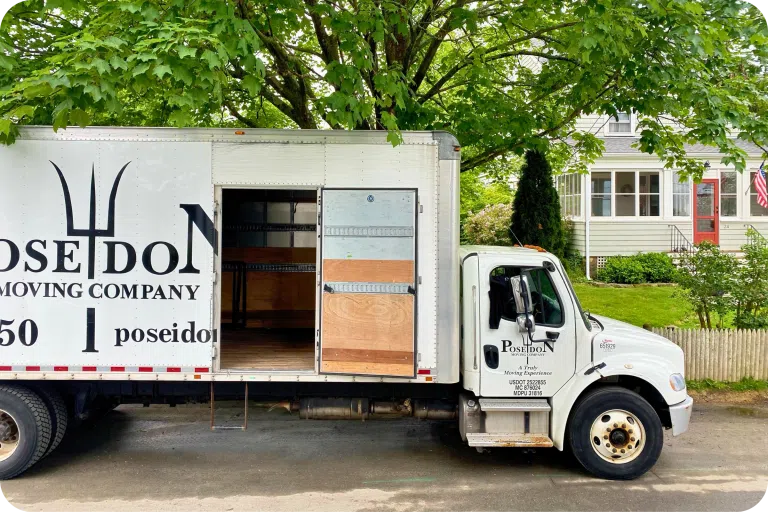
What to Expect on Moving Day

Moving day is the payoff for weeks of planning — and the one day where everything either comes together or falls apart. Whether you’re handling a local move across town or a long-distance relocation across the country, understanding what happens — and when — takes most of the stress out of the equation.
This guide covers the full moving day from start to finish: how to prepare in the days leading up, what the movers will do when they arrive, the paperwork you’ll sign, how payment works, and how to handle delivery and inspection. We’ve also included the real-world logistics that cause most moving day delays — building access, parking, elevator reservations, and city-specific scenarios we deal with every week.
For packing tips and damage prevention, see our long-distance moving tips. For cost breakdowns and estimate types, see our long-distance moving guide.
Local vs. Long-Distance: How Moving Day Differs
People searching for “what to expect on moving day” may be facing either a local or long-distance move. Both share the same basic structure — load, transit, unload — but the stakes, logistics, and paperwork are different:
✔ Local moves are typically completed in a single day. Your biggest variables are travel time between locations, parking access, and elevator availability. Pricing is usually hourly, and paperwork is minimal.
✔ Long-distance moves split into two separate events: pickup day (when the truck is loaded) and delivery day (which may be days or weeks later). Inventory paperwork is more detailed, you’ll sign a bill of lading, and your delivery window becomes a key planning factor. For a full breakdown, see our long-distance moving guide (linked above).
The moving day advice below applies to both — but we’ll call out where the process differs for long-distance moves specifically.
Before Moving Day: The 48-Hour Checklist
The work you put in before the movers arrive determines how smoothly the day goes. Start at least 48 hours out:
Two Days Before
✔ Confirm arrival time, crew size, and any special instructions with your movers
✔ Confirm building access at both ends — elevator reservation, parking permits, loading dock availability, COI delivery
✔ Finish all packing — the crew shouldn’t arrive to find rooms still being packed
✔ Defrost the freezer and drain hoses on the washing machine
The Night Before
✔ Pack your essentials bag (see below) and set it by the door — this stays with you, not on the truck
✔ Charge your phone and portable battery
✔ Walk through every room, closet, cabinet, attic, and garage — the final check catches the items you forgot
✔ Take photos of your home’s condition (for security deposit or insurance purposes)
✔ Get sleep — moving is physically demanding even when you have a full crew
Your Essentials Bag
This bag (or clearly marked box) covers the gap between when your old home is empty and your new home is set up. Keep it in your car or carry it personally — never put it on the truck.
✔ Medications and a first-aid kit
✔ Phone and laptop chargers + portable battery
✔ Toiletries and a change of clothes for each person
✔ Important documents (IDs, lease, moving contract, bill of lading copy)
✔ Jewelry and small valuables
✔ Snacks, water, and coffee supplies
✔ Bed sheets and a towel (if the truck might arrive after you)
✔ Basic tool kit (screwdriver, pliers, box cutter, tape)
✔ Cash for tipping (if applicable)
✔ Pet food, bowls, and leashes if applicable
Moving Day Timeline: Hour by Hour
Here’s how a typical moving day unfolds when you’re working with a professional crew. Times are approximate — a studio move compresses this, a 4-bedroom stretches it.
Hour 1: Arrival & Walkthrough
The crew arrives within the scheduled window (most companies provide a 1–2 hour arrival window — at Poseidon, your crew will text you 30–60 minutes before they arrive). They’ll introduce themselves, review the moving plan, and walk through the home with you. This is your chance to point out fragile items, things that aren’t going, furniture placement preferences at the destination, and any access issues they should know about.
Hour 1–2: Protection & Prep
Before a single box leaves the house, the crew protects your home. Floor runners go down in high-traffic areas. Door frame protectors prevent scuffs. Furniture gets wrapped in moving blankets and secured with stretch wrap. Large pieces (bed frames, tables, bookshelves) are disassembled and hardware is bagged and labeled. For long-distance moves, the crew also creates the inventory — tagging every item with a numbered sticker and noting its condition.
Hours 2–5: Loading
The crew loads the truck in a specific order: heavy furniture and appliances first, stacked boxes next, fragile items last (or in a secured section). Everything is strapped and padded to prevent shifting during transit. Your job during this phase is to be available for questions, keep the path clear, and keep pets and kids safely out of the work zone.
Loading time by home size (approximate): Studio/1BR: 1.5–3 hours. 2–3BR: 3–5 hours. 4–5BR: 5–8+ hours. Add time for stairs, long carries, or limited elevator access.
Before the Truck Leaves: Final Sweep + Paperwork
Once loading is complete, do a final walkthrough of every room, every closet, every cabinet, the garage, the attic, and under the sinks. Once the truck leaves, anything left behind stays behind. For long-distance moves, this is when you’ll sign the bill of lading and review the inventory sheet (more on both below).
Transit
For local moves, the crew drives directly to your new location — typically 30 minutes to an hour. For long-distance moves, transit can take days or weeks depending on distance and service level. If you’re driving separately, leave ahead of the truck and have the new home unlocked and ready when the crew arrives.
Unloading & Placement
At the destination, the crew unloads by inventory (for long-distance) or by room (for local). They’ll place furniture where you direct, reassemble anything that was taken apart at origin, and arrange boxes in the correct rooms. This is where your labeling system pays off — if boxes are clearly marked by room, placement is fast. If you used the color-swatch-on-door-frames method from our moving tips guide (linked at the top of this page), the crew can place boxes without asking about every one.
Final Walkthrough & Sign-Off
Before the crew leaves, walk through the home together. Confirm all items have been delivered, check furniture for damage, and inspect high-value items. For long-distance moves, check items off the inventory list. Note any damage or missing items on the delivery paperwork before signing. Once you sign clean, it’s significantly harder to file a successful claim.
The crew will also remove packing materials (moving blankets, shrink wrap, floor runners) and confirm the truck is empty. Then they’re on their way — and you’re home.
What Paperwork You’ll Sign on Moving Day
Moving day paperwork can feel overwhelming if you don’t know what to expect. Here’s what you’ll likely see and what to check before you sign:
1. Order for Service / Estimate Confirmation: This confirms the services you’ve agreed to and the estimate you were quoted. Review it to make sure the services listed, addresses, and price match what was originally discussed. Some movers present this before the crew starts loading.
2. Bill of Lading: This is the most important document of your move. It’s both your receipt and your contract of carriage. Before you sign, verify: pickup and delivery addresses, price and payment terms, all services listed, delivery window (for long-distance), and your valuation/liability selection. Keep your copy — it’s your primary document if you need to file a claim.
3. Inventory Sheet (Long-Distance): The crew inventories every item, tags it with a numbered sticker, and notes its condition — scratches, dents, stains, pre-existing damage. Read this carefully. If you disagree with a condition note (e.g., the crew marks a table as “scratched” but it isn’t), dispute it before signing. Whatever you sign here becomes the baseline for any future claim.
4. Delivery Receipt (at Destination): When your items are delivered, you’ll sign a receipt confirming everything arrived. Note any damage or missing items directly on this document before signing. This is your claim window — what you don’t note here becomes much harder to claim later.
Rule of thumb: Never sign anything you haven’t read. Never sign blank documents. If something doesn’t match what was agreed, ask questions before signing — not after.
How Payment Works on Moving Day
Payment timing and methods vary by company and move type. Here’s what’s standard:
✔ Local moves: Payment is typically collected at the end of the move, once everything is delivered and you’ve confirmed the final bill. Most companies accept credit cards, debit cards, cash, and certified checks.
✔ Long-distance moves: Payment structure varies. Some carriers collect a deposit at booking, with the balance due at delivery. Others split payment between pickup and delivery. Confirm the payment schedule before moving day so there are no surprises at the door.
✔ Tipping: Not required, but appreciated. A common guideline is $20–$40 per crew member for a local move, or $40–$60 per crew member for a long-distance move. Cash is standard. If the crew did an exceptional job — navigated a tough staircase, handled fragile items with care, showed up on time — tipping is a direct way to show it.
Red flags on payment
✗ A mover who demands full payment in cash before loading begins
✗ A mover who won’t accept credit card (limits your dispute options)
✗ A final bill significantly higher than the estimate without a clear, documented explanation
The Real-World Delays Most Guides Don’t Mention
Most moving day problems aren’t about packing — they’re about access. In dense cities like Boston, New York, and Washington D.C., the majority of moving day delays we see are building and parking related, not packing related. Here’s what actually causes problems and how to prevent them:
Building Access & COI Requirements
Many apartment buildings and managed properties require advance coordination before they’ll let a moving crew in. The most common requirements we see:
✔ Certificate of Insurance (COI): The building requires proof that the moving company carries liability insurance. Your mover sends this directly to the management company — but it can take a few business days, so request it early. If the COI isn’t on file when the truck shows up, some buildings will turn the crew away.
✔ Elevator reservation: Buildings with freight elevators typically require advance booking — sometimes weeks ahead. Without a reservation, you may share the elevator with residents or wait hours for access. In some buildings, the move can’t happen at all without a reservation.
✔ Move-in/move-out windows: Many buildings only allow moves during specific hours (e.g., 9am–5pm weekdays, no weekends). Know the rules at both your origin and destination — scheduling conflicts here can force a reschedule.
✔ Hallway and floor protection: Some buildings require the mover to lay floor protection and hallway padding before bringing anything through. Your mover should handle this automatically, but confirm in advance.
Parking & Truck Access
A 53-foot moving truck can’t park just anywhere. These are the scenarios that cause delays:
✔ No parking permit: In cities like Boston, you often need a street parking permit from the city to reserve space for the moving truck. Without one, the crew may need to double-park (risking a ticket) or park further away — adding time and cost.
✔ Narrow streets / low clearance: Some neighborhoods (think Beacon Hill, Georgetown, parts of Brooklyn) have streets too narrow for a full-size truck. The carrier may need a smaller shuttle vehicle to transport items from the truck to your door — and shuttle fees apply.
✔ Loading dock availability: High-rise buildings with loading docks schedule dock time. If you miss your window, you may need to reschedule or wait for the next available slot.
What “Long Carry” Means (and Why It Costs Extra)
A “long carry” happens when the moving truck can’t park close to your front door. If the crew has to carry items more than 75 feet from the building entrance to the truck (or vice versa), that’s a long carry — and most movers charge for it because it significantly increases labor time. Common scenarios: the truck parks in a lot across from the building, the entrance is at the end of a long hallway, or the loading area is on a different floor than the unit.
To avoid surprises, tell your mover about access conditions at both locations during the estimate. Take a photo of where the truck would park and the path to your door — this helps the estimator flag any potential charges upfront.
How to Avoid Common Moving Day Problems
Most moving day problems are preventable. Here’s what we see most often — and the fix:
✔ Not fully packed when the crew arrives. If the movers show up and rooms are still being packed, it delays everything. The crew can’t load what isn’t boxed. If you’re not going to be ready, consider booking professional packing as an add-on.
✔ Building access wasn’t arranged. The COI wasn’t sent, the elevator wasn’t reserved, or the building doesn’t allow moves on that day. Call both buildings at least a week out and confirm every requirement.
✔ Parking wasn’t secured. In cities with street parking, no permit means the truck has nowhere to go. Apply for a parking permit at least a week before your move — some cities require more lead time.
✔ Items were added after the estimate. If you tell the movers about 30 boxes but have 50 on moving day, it takes longer and may cost more. Do a thorough inventory before your estimate — and walk the estimator through every room, including the garage, attic, and storage.
✔ No one is home to direct the crew. The movers need someone present to answer questions, confirm what goes and what stays, and sign paperwork. If you can’t be there the entire time, be present at arrival and departure — or designate a trusted representative.
Let Poseidon Moving Handle Moving Day
Poseidon Moving is a licensed carrier with our own trucks and crews. We handle local moves across Greater Boston and interstate relocations nationwide — packing, loading, transport, delivery, and furniture reassembly at the other end.
✔ On-time arrival with advance notification
✔ Floor, door frame, and hallway protection at both locations
✔ Professional wrapping, disassembly, and reassembly included
✔ COI provided to your building upon request
✔ Clear communication throughout the entire move
✔ Final walkthrough and inventory check before the crew leaves
Ready to make moving day the easy part? Request a free quote today and we’ll match you with the right crew and service level for your move.