How to Prepare Furniture for Long Distance Moving
How to Prepare and Protect Furniture for Long Distance Moving
Preparing furniture for moving is one of the most important steps in preventing damage and preserving value. Whether you’re relocating a few miles away or across the country, furniture is often the largest, heaviest, and most vulnerable part of your move. Without the right protection, it can suffer scratches, dents, broken legs, or warped frames during handling and transit.
When moving long distance, the risks increase due to extended travel time, multiple loading and unloading points, and changing climate conditions. Protecting furniture properly from the start helps ensure a smooth, stress-free move. It also keeps your items organized, easier to load, and ready to use in your new home without costly repairs or replacements.
Should You Move, Sell, or Store Your Furniture?
Before you start wrapping and packing, take a moment to consider: is this furniture worth moving? Not all pieces justify the cost, time, or effort involved in a long-distance relocation. Evaluate the value, size, condition, and emotional significance of each item. In some cases, it may be cheaper and easier to sell it locally and purchase something new after the move.
Deciding what to do with furniture when moving depends on your space constraints, your budget, and how much the piece means to you. Some furniture has monetary value, while other items carry deep sentimental meaning — both are valid reasons to keep them. On the flip side, moving is also an excellent opportunity to declutter. Consider donating gently used items to local charities, shelters, or families in need.
✔ Move it — heirlooms, high-quality pieces, and items with sentimental value often warrant the extra care and cost.
✔ Sell or donate it — large or outdated items that no longer fit your lifestyle may be best sold, given away, or donated.
✔ Store it — if your new home isn’t ready or you’re in between places, short-term storage can be a smart and flexible solution.
What Materials to Use to Protect Furniture When Moving
Before you begin wrapping or disassembling furniture, it’s essential to have the right supplies on hand. Using the proper materials and packing techniques can mean the difference between a smooth move and damaged goods. Cross-country moving exposes your furniture to vibration, shifting, and pressure, so the materials you choose should offer both cushioning and containment.
Key furniture protection materials include:
● Furniture pads and moving blankets — essential for soft protection, especially on wooden or upholstered surfaces. They cushion impact, prevent scratches, and reduce friction during transit. Ideal for dressers, bed frames, and dining tables.
● Stretch wrap — used to secure moving blankets, protect leather or fabric from dust and dirt, and keep drawers or cushions in place. Especially useful for mattresses, upholstered furniture, and items with detachable parts.
● Bubble wrap — provides shock absorption for fragile furniture parts like glass tabletops, mirrors, marble tops, or carved wood. Always wrap before placing items in boxes or crates.
● Corner protectors — great for safeguarding vulnerable corners on desks, shelves, or dressers from chips, dents, or breakage.
● Packing tape and straps — packing tape secures wraps and padding in place, while moving straps help stabilize heavy furniture and prevent sliding or tipping inside the truck. Visit our packing materials page for a full list of supplies.
Pro tip: Never apply tape directly to wood, leather, or fabric surfaces — it can leave residue or strip finishes. Always place a moving blanket or padding layer between the tape and the furniture surface.
How to Clean and Inspect Furniture Before Moving
Before wrapping or disassembling anything, clean each piece thoroughly. Dirt, dust, and debris trapped under moving blankets can scratch surfaces during transit — especially on polished wood, glass, or lacquered finishes. Cleaning also gives you the chance to document the existing condition of each item, which is important for insurance purposes if anything is damaged during the move.
✔ Wood furniture: Wipe down with a damp cloth and a mild wood cleaner. Avoid excess moisture. Let surfaces dry completely before wrapping.
✔ Upholstered furniture: Vacuum fabric surfaces to remove dust and pet hair. Spot-clean stains if time allows.
✔ Leather furniture: Clean with a leather-safe wipe or conditioner. Avoid wrapping leather in plastic directly — use a breathable moving blanket first to prevent moisture buildup.
✔ Glass and marble: Clean with glass cleaner and dry completely. Inspect for existing chips or cracks and photograph them for your records.
✔ Metal furniture: Wipe down to remove dust and fingerprints. Check joints and connections for tightness before wrapping.
Take photos of every piece from multiple angles before wrapping. These photos serve as proof of condition if you need to file a damage claim after delivery.
When and How to Disassemble Furniture for a Move
Not all furniture needs to be disassembled. Many compact, sturdy pieces like nightstands, small dressers, or bookcases can be moved intact as long as they’re properly wrapped. However, for larger, heavier, or more awkward items, disassembly is often the safest and most efficient option.
Focus first on bulky furniture such as bed frames, dining tables, sectional sofas, desks, and large shelving units. Remove detachable parts like table legs, couch arms, shelves, and headboards. Knowing how to disassemble a bed frame for moving or how to take apart a couch helps protect delicate joints and makes loading easier.
Basic tools you’ll need:
● Allen wrenches (often needed for IKEA or modular furniture)
● Phillips and flathead screwdrivers
● Pliers
● A small socket wrench set for bolted joints
As you remove hardware, place screws, bolts, and small parts in labeled zip-top bags. Either tape these to the corresponding piece or place them in a dedicated, clearly labeled hardware box. Use your phone to take a few photos as you go — this makes reassembly faster and less stressful at your destination.
Hiring movers? At Poseidon Moving, our crew handles furniture disassembly and reassembly as part of your move — including beds, tables, desks, and shelving units. Just make sure disassembly is listed on your inventory and confirmed with your moving consultant in advance.
Best Way to Wrap and Protect Furniture for a Long Distance Move
Properly wrapping furniture for a long distance move is one of the most effective ways to prevent scratches, dents, and stains during transport. Once your furniture is cleaned and disassembled (if necessary), it’s time to apply the right materials based on the item’s surface and structure.
For Wooden Furniture
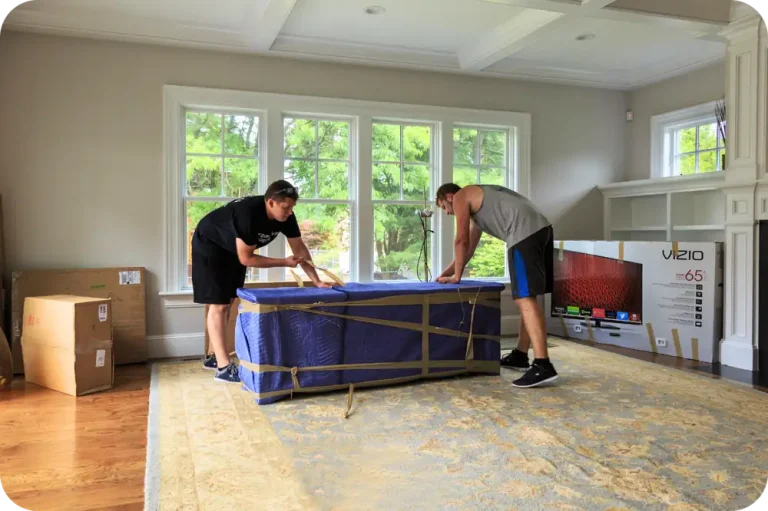
Use thick moving pads or furniture blankets to prevent surface damage. Think of it like wrapping a gift: drape the blanket evenly around the piece, fold the excess neatly at the corners, and use packing tape or stretch wrap to hold it tightly in place. This method works best for wooden bed frames, desks, dressers, dining tables, and bookshelves, where surfaces are vulnerable to pressure and scraping.
For Couches and Upholstered Furniture
The goal is to shield the fabric from dirt, moisture, and tears. Place a moving pad on each end of the couch and one across the middle. Then, use stretch wrap to tightly encase the entire piece, keeping the pads firmly secured. Remove cushions and wrap them separately using plastic or fabric covers for added protection and space efficiency. This is the best way to wrap a couch for moving without compromising structure or comfort.
For Glass, Marble, and Fragile Surfaces
Wrap fragile surfaces such as glass tabletops, mirrors, or marble slabs in several layers of bubble wrap, making sure all edges and corners are cushioned. Then place them into a dish pack or flat box lined with packing paper or foam inserts. Clearly label the box as fragile and always keep it upright during loading and transport.
Wrapping furniture for a long distance move isn’t just about damage prevention — it’s about customizing your protection method to match each piece’s material, size, and sensitivity. Doing this right reduces risk, speeds up loading, and gives you peace of mind.
How to Load and Secure Wrapped Furniture for Transport
After wrapping and protecting your furniture, the next essential step is loading and securing each piece properly for transport. Start by placing the heaviest items — such as dressers, sofas, or large dining tables — at the bottom of the truck and closest to the cab. This creates a stable base and keeps the truck balanced. Avoid stacking anything heavy on fragile surfaces, and be mindful of how soft or upholstered items are positioned to prevent crushing.
Loading Order Best Practices
✔ Heaviest items first — dressers, desks, appliances go against the cab wall.
✔ Sofas and mattresses upright — saves floor space and prevents crushing.
✔ Glass and mirrors upright — cushioned between soft surfaces like mattresses or padded furniture.
✔ Fill gaps — use wrapped pillows, blankets, or soft boxes to prevent sliding.
✔ Strap everything down — use moving straps or tie-downs attached to built-in hooks or rails in the truck.
Properly loading and securing your wrapped furniture protects all your preparation work and dramatically reduces the risk of damage during a long distance move.
Furniture-Specific Protection Tips
Different types of furniture require different approaches. Here’s a quick reference for the most common pieces people move long distance:
Bed Frames & Headboards
Disassemble fully. Wrap rails and headboard in moving blankets. Bag all hardware and label by bed. If you have a sleigh bed or carved headboard, add bubble wrap on raised/ornate areas.
Dining Tables
Remove legs if possible. Wrap the tabletop in moving blankets and secure with stretch wrap. Pad legs individually and bag all bolts. For glass-top tables, wrap the glass separately in bubble wrap and transport upright.
Dressers & Chests
Remove drawers or secure them with stretch wrap so they don’t slide open. Wrap the entire unit in moving blankets. Lighter dressers can be moved with clothes inside to save box space — just wrap extra securely.
Sectional Sofas
Separate all sections. Wrap each piece individually in moving blankets and stretch wrap. Remove and bag any connecting hardware. Label each section (left arm, right arm, center) so reassembly is fast.
Bookshelves & Entertainment Centers
Remove all shelves, glass doors, and adjustable pegs. Wrap the frame in moving blankets. Wrap glass shelves individually in bubble wrap and transport in a mirror/picture box.
Antique & High-Value Furniture
These pieces often require custom crating for maximum protection. Use acid-free packing paper to avoid chemical reactions with finishes. Photograph extensively and consider additional valuation coverage for high-value items.
Furniture Moving Checklist for Long Distance Moves
A successful long distance move depends on how well you prepare in advance. Use this checklist to make sure every piece of furniture is ready for transport:
✔ Evaluate which pieces to keep, sell, donate, or store
✔ Clean and inspect every item — photograph condition before wrapping
✔ Disassemble bulky items — beds, tables, sectionals, shelving units
✔ Bag and label all hardware (screws, bolts, brackets)
✔ Gather packing materials — moving blankets, stretch wrap, bubble wrap, corner protectors, tape, straps
✔ Wrap each piece using the right method for its material (wood, upholstery, glass, marble)
✔ Load heaviest items first, closest to the cab
✔ Secure everything with straps and fill gaps to prevent shifting
✔ Label all pieces and boxes for efficient unloading and reassembly
✔ Document everything for insurance purposes
A well-thought-out furniture moving checklist helps you stay in control, reduces the chance of damage, and ensures your most important belongings arrive safely at your new home.
Let Poseidon Moving handle it: Our crews are trained in furniture disassembly, professional wrapping, secure loading, and reassembly at delivery. We use heavy-duty moving blankets, stretch wrap, and straps on every move. Request a free quote to protect your furniture from start to finish.